

Box Materials Guide
Material Sets the Rules
Material is the second big decision after size, and it shapes everything downstream: how the box prints, how much it protects, how it feels in the hand, and what it costs. The four materials below cover nearly every custom box. Understanding how each behaves lets you match material to product instead of defaulting to whatever's cheapest.
The Four Core Materials
| Material | Structure | Strengths | Typical use | |
|---|---|---|---|---|
| Corrugated | Fluted board between liners | Strong, protective, light | Shipping, mailers, displays | |
| Cardstock (SBS) | Solid coated board | Crisp print, smooth surface | Retail folding cartons | |
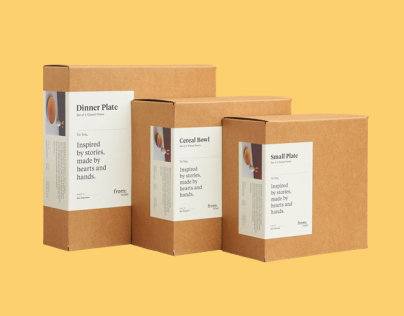
| Kraft | Unbleached fiber board | Natural look, recyclable feel | Eco/artisan positioning | |
| Rigid (greyboard) | Thick chipboard, paper-wrapped | Premium weight and feel | Luxury set-up boxes |
Corrugated and Cardstock in Depth
Corrugated earns its place through strength-to-weight: the fluted medium resists crushing and cushions contents. Flute size (E, B, C) trades print detail against thickness and protection. Cardstock — usually SBS — has no flute, so its smooth face reproduces gradients, fine type, and metallics beautifully, which is why retail cartons rely on it. Caliper (thickness in points) is chosen to match product weight.
Kraft and Rigid in Depth
Kraft is unbleached fiber board with a warm brown surface and a natural, recyclable feel that suits artisan and eco-forward brands. Because the surface is dark, light inks and knockouts read best on it. Rigid boxes are built from thick greyboard (chipboard) wrapped in printed paper. They don't fold flat — they're assembled — which is why rigid pilot runs start at 250 units, but the payoff is unmatched weight and a premium open. We offer finishing across all four materials, from matte and gloss coatings to soft-touch, foil, and embossing where the surface allows.
Matching Material to Real Constraints
In practice, material choice usually comes down to a few constraints: does it ship on its own, how premium should it feel, how detailed is the artwork, and what's the budget. Something that ships alone leans corrugated for protection. A retail carton with rich graphics leans SBS cardstock for print fidelity. A natural or artisan brand leans kraft, accepting muted color. A luxury unboxing leans rigid, accepting a 250-unit minimum and higher cost. Many projects combine materials — a rigid box with a corrugated shipper, or a cardstock carton with a corrugated insert — and we help you weigh the trade-offs against your product and budget.
How Caliper and Flute Are Specified
Two numbers describe most board choices. For paperboard and cardstock, thickness is given in points (pt), where one point is a thousandth of an inch; a folding carton often lands in the mid-teens to low-twenties in points, heavier for larger cartons that need to hold their shape. For corrugated, the flute letter describes the wave height between liners: E-flute is thin and prints cleanly for retail-facing mailers, B-flute adds a little more cushioning, and C-flute is a common shipping-carton profile. Rigid boxes are built from thick greyboard measured in millimeters and then wrapped in a printed paper. When you request a quote, you don't have to specify these yourself; describe the product, how it ships, and the feel you want, and we translate that into a caliper or flute that balances protection, print quality, and cost.