

Custom Cardstock Boxes & Folding Cartons

The Retail Carton Workhorse
Cardstock — solid bleached sulphate (SBS), clay-coated news back (CCNB), and kraft board — is the material behind most retail folding cartons. It is light, folds flat for shipping, and takes fine print detail beautifully, which is why cosmetics, supplements, and packaged goods rely on it.
Unlike corrugated, cardstock has no flute, so its smooth surface reproduces gradients, small type, and metallic effects cleanly. We size each carton to hold your product securely, whether that's a bottle, a jar, a pouch, or a set, and prepare a dieline that folds and glues reliably on automated equipment.
Cardstock Options
- Board
- SBS (white), kraft (natural), and coated back options
- Caliper range
- Typically 14 pt to 24 pt depending on product weight
- Carton styles
- Straight tuck, reverse tuck, auto-bottom, seal-end
- Printing
- Offset and digital; PMS spot colors
- Finishing
- Matte, gloss, soft-touch, spot UV, foil stamping, embossing
- Pilot quantity
- From 100 units
SBS vs. Kraft Board
| Attribute | SBS (white) | Kraft (natural) | |
|---|---|---|---|
| Surface | Bright white, smooth | Warm brown, textured | |
| Print look | Vivid, true color | Muted; light inks read best | |
| Positioning | Clean, premium retail | Natural, artisan, eco-forward |
Finishing That Elevates a Flat Carton
Because cardstock is smooth, it's the best canvas for tactile finishing. Soft-touch lamination adds a velvety feel, spot UV creates contrast against a matte background, and foil stamping or embossing adds dimension to a logo. We recommend combining no more than two or three effects so the design stays legible rather than busy.
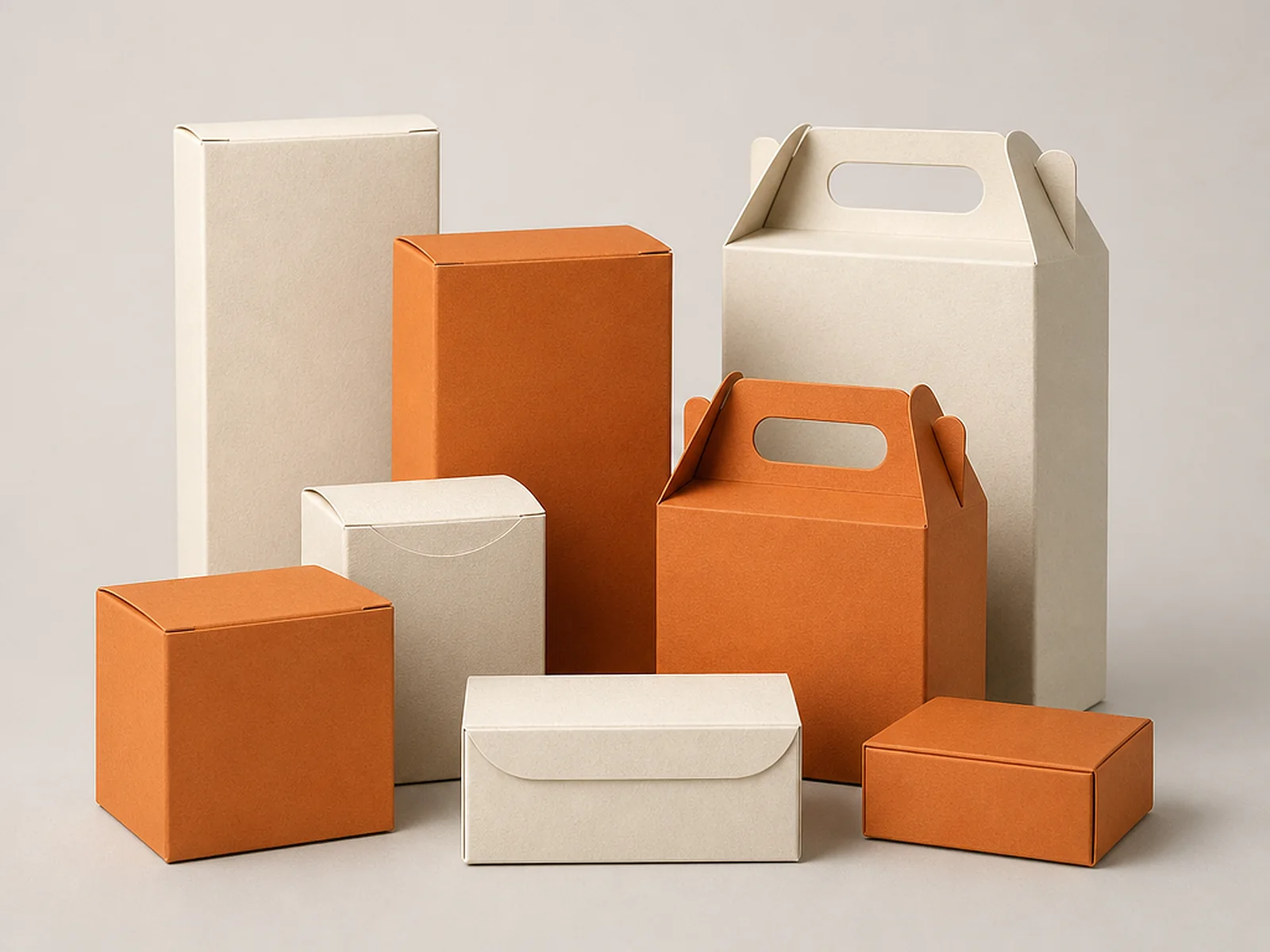
Cartons Built to Run Clean
A well-designed folding carton has to erect reliably on automated equipment and hold its contents without bulging. We engineer the dieline so glue tabs bond securely, tuck flaps seat cleanly, and the carton keeps its shape under the product's weight — choosing caliper to match. Cartons ship flat and are erected at pack-out, saving freight and storage versus pre-assembled boxes. Offset suits detailed, higher-volume runs; digital keeps pilots affordable by removing plate costs, and lets you print short versioned runs economically.
Choosing Board, Caliper, and Surface
Cardstock is specified by both its type and its caliper — the thickness measured in points. A lighter caliper folds and tucks easily and keeps cost down for small, light products, while a heavier caliper gives a carton a substantial, premium feel in the hand and resists warping on larger panels. When you tell us the product weight and the panel dimensions, we recommend a caliper that stays rigid at the sizes you need without wasting material.
Surface is the other decision. Solid bleached sulphate (SBS) has a bright white, coated face that renders photographic artwork and fine type crisply, which makes it the default for retail and beauty. Uncoated and kraft stocks give a natural, tactile look that suits artisan and eco-minded brands, though they shift ink color slightly warmer, so we soft-proof to set expectations. Coatings and finishes — matte or gloss, soft-touch, spot UV, foil, and embossing — are layered on top to protect the print and add contrast between dull and shiny areas. We advise which combination reads well on your chosen stock before the run begins.